
From insight to action – why most CX programs stop at analysis
Many companies collect feedback, build dashboards, prepare summaries… and that’s where it ends. The problem is not a lack of data. The problem is that:
- insights have no owner,
- they are not translated into concrete decisions,
- no one measures whether anything has actually improved.
This is why CX often loses to “urgent operational matters”.
What is an insight (and what is it not)?
An insight is a conclusion with consequences. It is not merely a statement that “scores have dropped”.
An insight has three characteristics:
- context (where and when it happens – touchpoint, segment),
- a cause hypothesis (why – drivers, comments),
- an implication (what this changes and what should be done about it).
These are not insights:
- “The average dropped by 0.3” (no context or cause),
- “Customers are dissatisfied” (too vague),
- “We need to improve quality” (no specificity and no leverage).
Why organizations fail to implement actions (even when they see the problem)
Most often, it’s not bad intent. It’s a lack of mechanism.
Typical blockers:
- lack of priority (CX loses to day-to-day operations),
- lack of ownership (everyone responsible = no one responsible),
- lack of time (no room to improve the process),
- lack of an outcome metric (no way to tell if the change works),
- insights that are too generic (you can’t turn them into a task).
If you want execution, you need to build a simple path: insight → decision → task → outcome.
How to turn an insight into action: a simple 5-step method
The framework below is intentionally simple, because it is meant to work in a real organization.
- 1. Define the context Where exactly is the problem? (touchpoint, location, time, channel)
- 2. Identify the driver
Which area of the experience is behind the problem? (e.g. time, communication, service) - 3. Write the hypothesis
What is likely causing the negative feedback? (e.g. staff shortages during peak hours) - 4. Design the intervention
What exactly are we changing, and who is responsible? - 5. Define verification
How will we know it worked? (quality metric + segment + time horizon)
The key element is step 5. Without verification, you have “action”, but not management.
Example: from insight to action (realistic and simple)
Insight: A drop in CSAT at the “Waiting” touchpoint in Location A between 5:00–7:00 PM.
Hypothesis: During peak hours, queues form and customers don’t know how long they will wait (driver: time and communication).
Corrective action:
- one additional staff member during peak hours for two weeks,
- simple information about waiting time (board / message / instruction),
- schedule adjustments on the days when the drop is the largest.
Verification:
- CSAT and comments in the segment: Location A, 5:00–7:00 PM, “Waiting” touchpoint,
- trend over 2–4 weeks,
- additionally: number of complaints / tickets (if applicable).
This is management: problem → cause → intervention → measurement of impact.
How to manage a portfolio of corrective actions (without drowning)
When there is a lot of feedback, chaos is easy. Simple discipline helps.
Practical rules:
- a maximum of 3–5 active actions per area / location,
- one action = one owner + one deadline,
- prioritize based on: impact on KPIs / volume of negatives / ease of implementation,
- every action must have predefined verification.
If you don’t limit the number of actions, the organization will be “in permanent improvement” with no real results.
From insight to action in Data Responder
Data Responder supports this process by bringing together, in one place:
- context (Customer Journey and touchpoints),
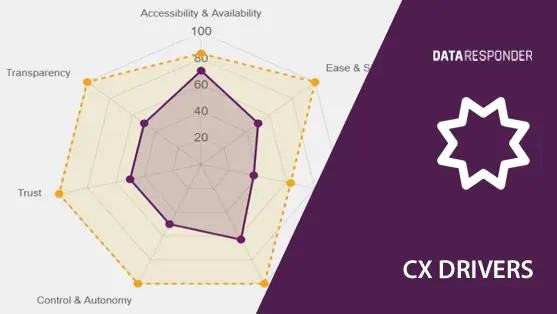
- CX drivers (the cause layer),
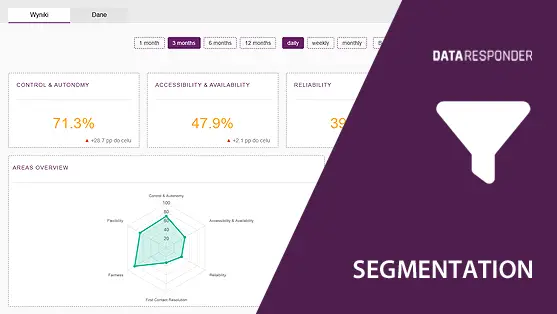
- segmentation (time, place, channel),
- quality dashboards (monitoring),
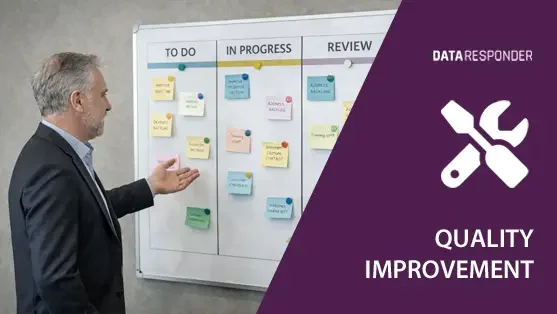
- and a kanban board for managing corrective tasks.
Thanks to this, you don’t stop at a report. You can:
- identify a problem in a specific segment,
- create a corrective action,
- assign an owner and a deadline,
- check whether metrics in that segment have improved.
This closes the CXM loop: measurement → diagnosis → action → verification.
Conclusions
An insight is not information. An insight is a conclusion that must lead to action.
If you want feedback to genuinely improve quality:
- always anchor the problem in context (touchpoint + segment),
- link results to drivers to understand the “why”,
- turn insights into tasks with an owner and a deadline,
- measure impact over time – otherwise you don’t know if the change works.
That is when CX stops being reporting and becomes a mechanism for enforcing quality improvement.