
Why linking experience quality to business KPIs is “enterprise level”
Low-cost survey tools usually stop at collecting opinions and displaying simple charts. That may create a sense of control, but it is not management. The enterprise level begins when you can answer the question: does improving customer experience quality actually impact business results?
This is what separates “we run surveys because we should” from real decision-making, budgeting, and prioritization.
Which business KPIs are most often linked to experience quality?
Not every business metric makes sense in a CX context. It is best to start with KPIs that logically stem from customer experience.
Examples of KPIs that often react to quality:
- retention (returns, repeat purchases),
- churn (customer loss),
- revenue per customer (ARPU / AOV, depending on the model),
- number of complaints and returns,
- cost of service (support time, number of tickets),
- conversion at key stages (e.g. payment, onboarding).
The key is to choose KPIs for which experience quality has a credible path of influence.
Why correlation may not be visible immediately
Even if experience quality truly affects KPIs, it does not have to show up instantly on a weekly chart.
The most common reasons:
- delayed effect – customers decide to return after some time,
- indirect impact – quality reduces problems, which then affects costs and churn,
- noise and seasonality – campaigns, holidays, weather, or pricing can mask quality effects,
- different segment reactions – improvements may apply only to part of the customer base.
A mature approach is therefore not “is there a correlation today?”, but: do we see a repeatable relationship over time, within segments and touchpoints?
From opinions to impact: you need shared data context
If you keep:
- feedback and ratings in one place,
- and business KPIs in spreadsheets, CRM, or POS systems,
you usually end up with intuition instead of evidence.
To talk seriously about impact, you need:
- a shared time frame (comparable periods),
- segments (e.g. location, channel, touchpoint),
- reference points (a baseline before changes),
- trend analysis rather than single data points.
This is why feedback without business data is only a half-finished product.
What does importing KPIs into a CX system enable?
Importing business data into a CX tool is not a “nice-to-have”. It is the foundation for moving from opinions to management.
With KPIs inside the system, you can:
- see whether drops in quality precede changes in churn or complaints,
- compare locations not only by ratings, but by actual business impact,
- measure the effect of corrective actions (before/after) on KPIs,
- build budget arguments: “this improvement reduces service costs”,
- avoid cosmetic actions that improve scores but do not change outcomes.
This is the moment when CX becomes part of company management – not just a marketing initiative.
How to approach this practically (without magic or false promises)
A simple, safe implementation approach:
- choose 1–2 KPIs with the strongest logic of influence (e.g. complaints and churn),
- anchor measurement to specific touchpoints in the Customer Journey,
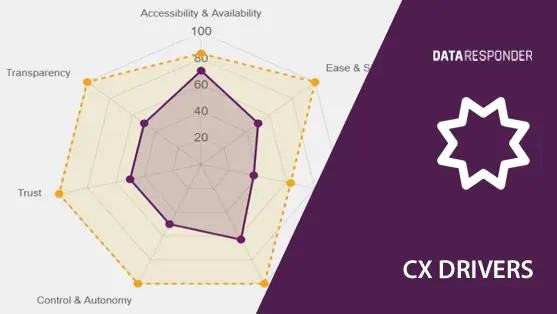
- define CX drivers to understand what you are improving,
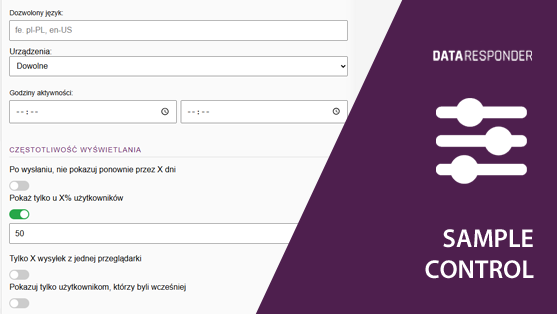
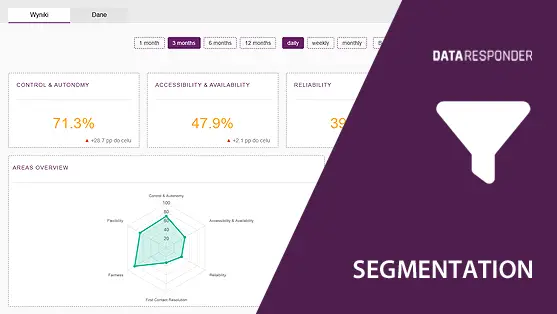
- segment results by time, place, and channel,
- observe trends over time and look for delayed effects (weeks, months, quarters).
Do not promise 1:1 correlations. Promise better decision quality.
Linking experience quality with KPIs in Data Responder
Data Responder supports this approach by bringing together, in one place:
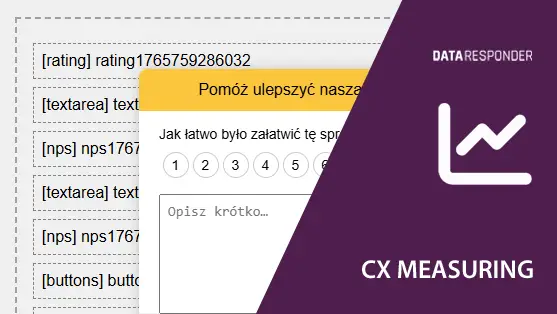
- operational feedback (forms, QR codes, terminals),
- context (touchpoints and Customer Journey),
- CX drivers (the interpretation layer),
- segmentation (time, location, channel),
- and reference business KPIs (via import or manual entry).
This allows you to analyze experience quality and business KPIs side by side, using the same dimensions – without manual spreadsheet stitching.
Conclusions
Linking experience quality with business KPIs is the most difficult part of CX – but also the one that most clearly distinguishes mature programs from “surveys for the sake of it”.
For this to work:
- do not expect immediate 1:1 correlations,
- focus on trends and possible delayed effects,
- analyze results by segments and touchpoints,
- import KPIs to base decisions on data, not intuition.
When experience quality and business KPIs meet within one analytical model, feedback stops being “opinion” and becomes a management tool.