
Introduction
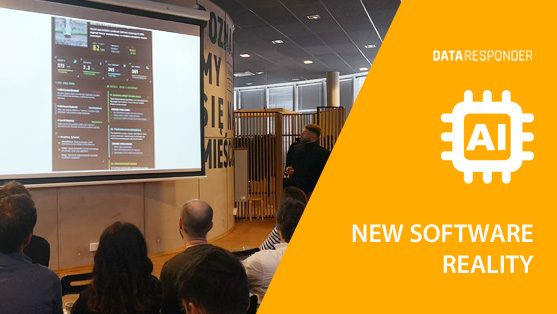
AI Breakfast #17 at the Pomeranian Science and Technology Park Gdynia brought together founders, system architects, AI specialists, and people building technology products. The discussions focused not only on specific projects or tools, but also on the rapidly accelerating changes across the software industry.
It is becoming increasingly clear that the discussion is no longer about whether AI will change the way we work in technology, but how quickly it will force changes in skills, team structures, and business models. AI is no longer an add-on supporting software teams – it is starting to shape how they function.
Software in a phase of reconstruction
Just two years ago, implementing AI was seen primarily as an innovation initiative. Today, in many cases, it is becoming a condition for staying competitive. Automation and systems based on language models are entering areas that until recently were the exclusive domain of specialists.
This is changing the operating logic of technology teams. Increasingly, the key value lies not in writing code itself, but in designing processes, architectures, and decision-making systems where AI is an integral component. The focus is shifting from manual production of solutions to building environments that enable rapid creation, testing, and iteration.
New skills, new roles
Technological transformation is quickly reshaping the job market. Skills that were sufficient not long ago now require updating, and in some cases a complete shift in direction. A specialist’s value is increasingly determined not only by deep expertise in a single area, but by adaptability and the ability to work effectively in AI-supported environments.
Continuous learning, testing new tools, and readiness to redefine one’s role are becoming essential. For startups and technology companies, this also means rethinking how teams are built: placing greater emphasis on interdisciplinarity, flexibility, and the ability to combine technical, product, and business competencies.
AI as a driver of business model change
The impact of AI goes beyond the technological layer. Faster development cycles, automated analysis, and decision-support systems are causing traditional sources of competitive advantage to become obsolete more quickly. Increasingly, value lies not in software development alone, but in designing systems and services that integrate AI in a thoughtful way.
For many organizations, this means redefining the value delivered to customers and accelerating experimentation with new solutions. A clear signal of the scale of change can be seen in ongoing initiatives from major technology companies, such as AI projects developed by Google, demonstrating how quickly capabilities and expectations around software and data work are evolving.
Why attending such meetings is no longer optional
In an environment where technological knowledge becomes outdated faster than product roadmaps, access to up-to-date market insights becomes a critical resource. Industry meetups are no longer just about networking or inspiration – they have become a way to verify assumptions and reassess strategic direction.
Direct conversations with people building products and teams make it easier to identify changes that may affect company or product strategy. In many cases, this helps avoid investing time and resources in solutions that may quickly lose market relevance.
Conclusions
AI Breakfast #17 confirmed that the software industry and startup ecosystem are entering a phase of intense reconstruction. AI is no longer an experimental area operating at the margins of technology companies – it is becoming one of the main forces shaping their future.
In this environment, it is not enough to adopt new tools. What matters is continuously updating knowledge, confronting assumptions with market reality, and remaining ready to change direction. The greatest risk for technology companies today is not making mistakes, but holding on too long to assumptions that are already becoming outdated.